Purrs
World's most advanced Web3 cat platform.
2021 - Purrs V1 (purrs.bg)
Purrs started by accident in 2021. Founder Biser took two stray kittens off the street outside his Covid-emptied office, intending to find them homes.
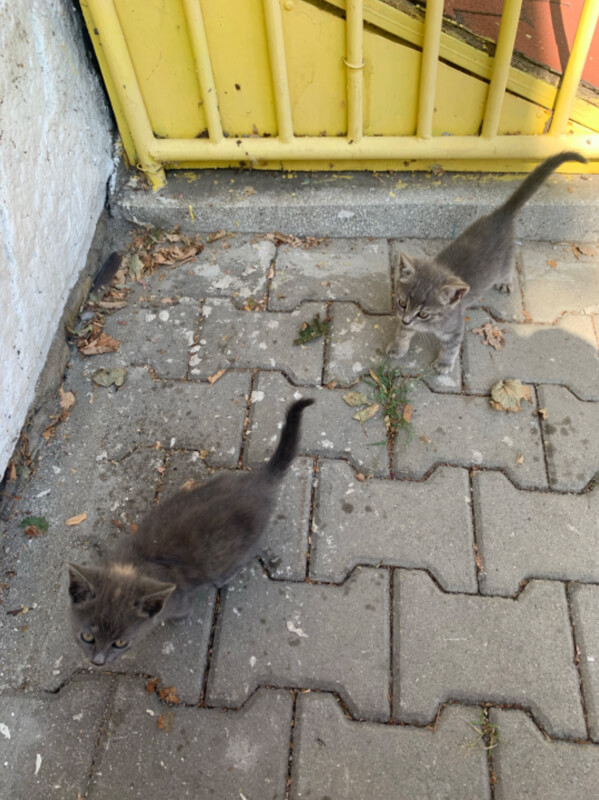
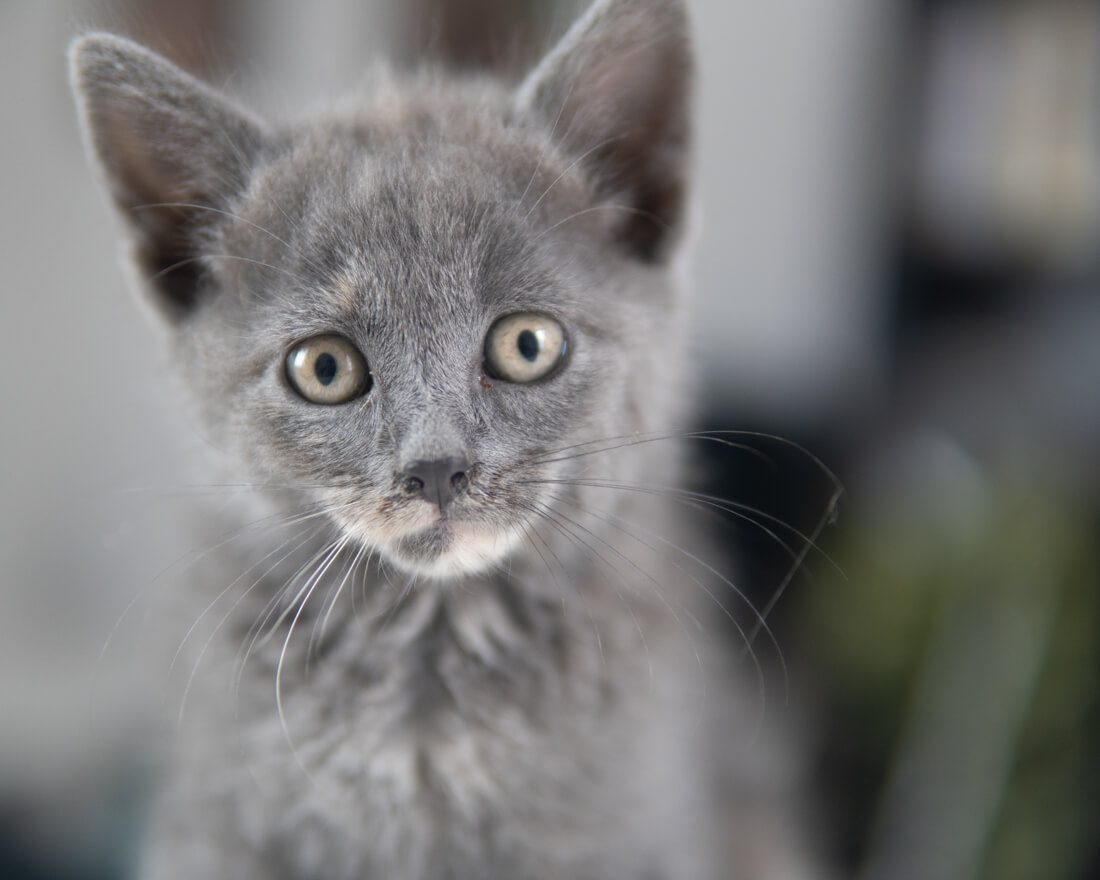
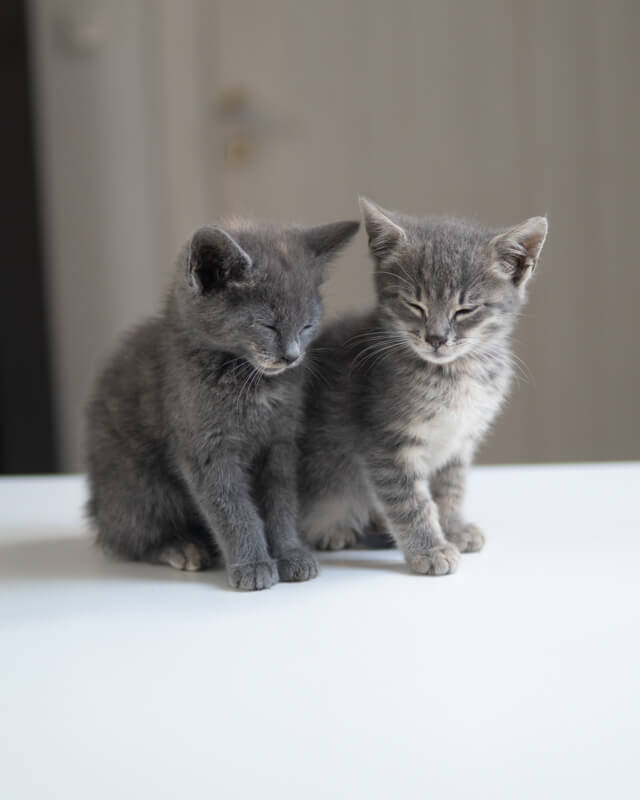
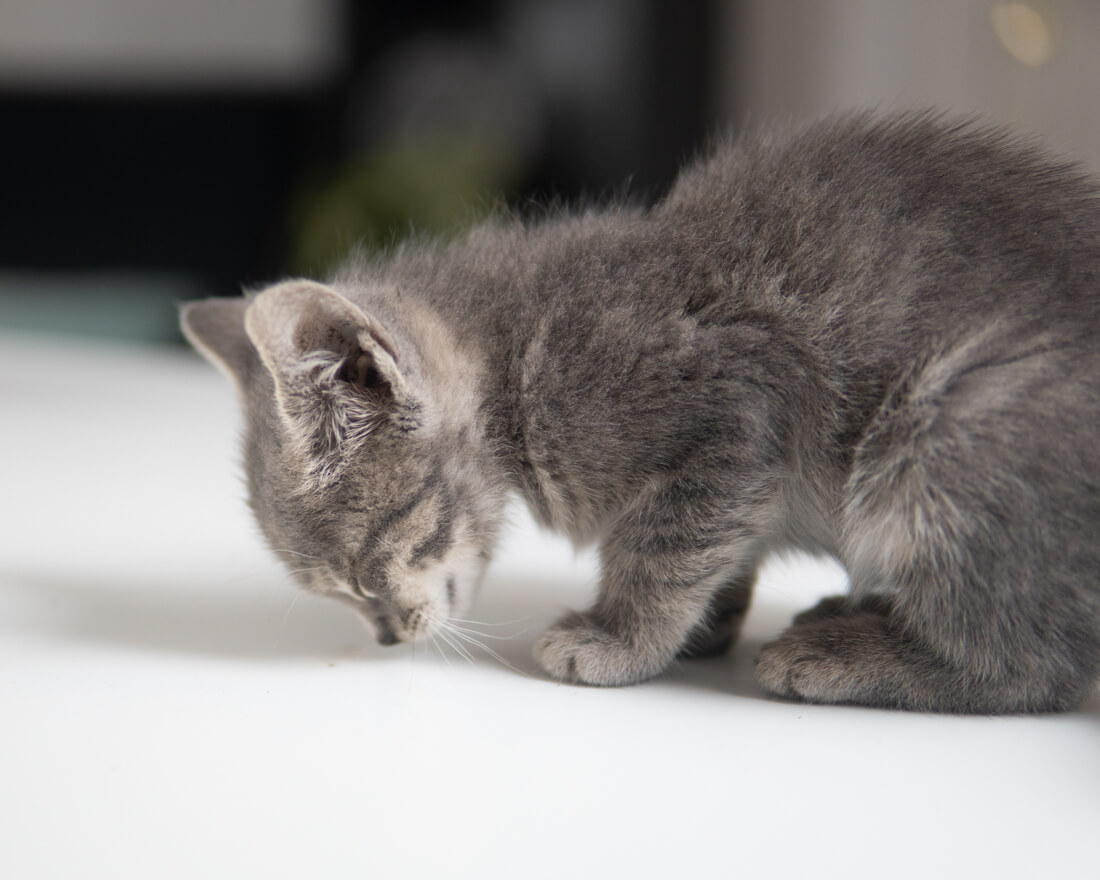
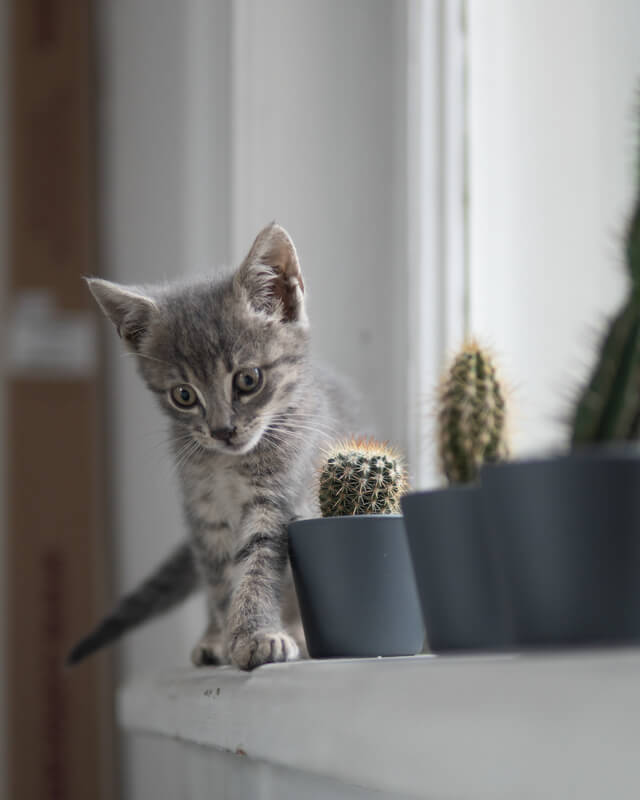
When everyone said "NO"
When Facebook groups and rescue organizations turned him away, he launched purrs.bg as a small Ruby on Rails app to collect adoption applications and spread the word.
Over time, Purrs evolved into a modern platform: rescuers manage listings and run their workflows in one place; adopters discover cats through structured matching, apply, and move through screening without bouncing across channels.
Purrs has operated as a nonprofit foundation since day one. The decision was deliberate: build the product, the rescuer base, and the trust layer first, and decide on next stage only once those existed.
2025 - Purrs V2 purrs.com
Over the following years, Purrs became the country's most popular cat platform, and drew attention in unexpected ways.
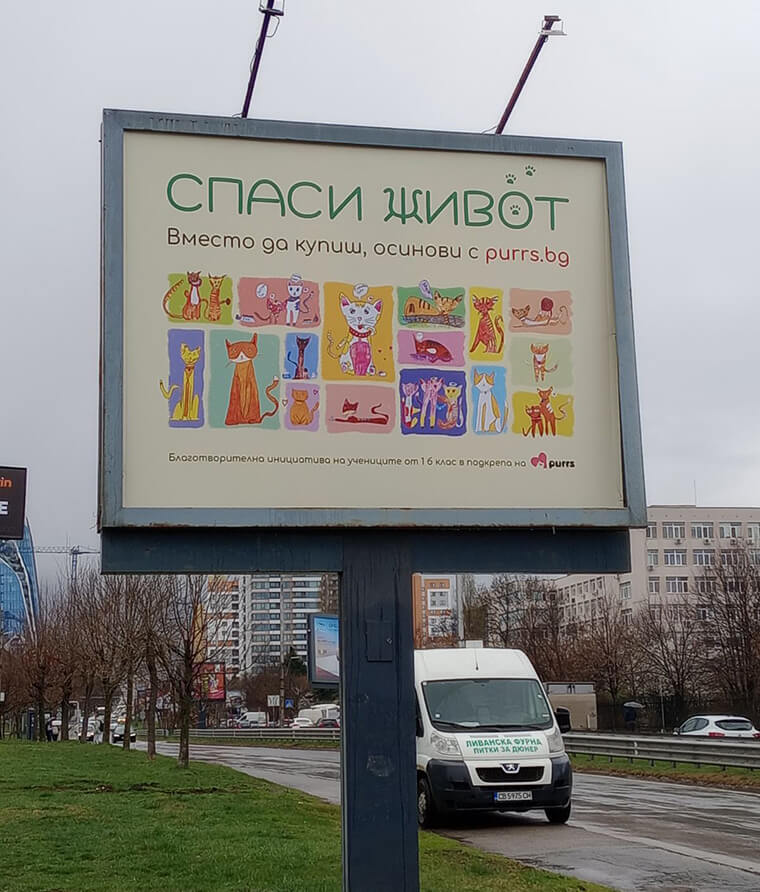
An elementary school made this billboard for Purrs out of children's drawings of cats.
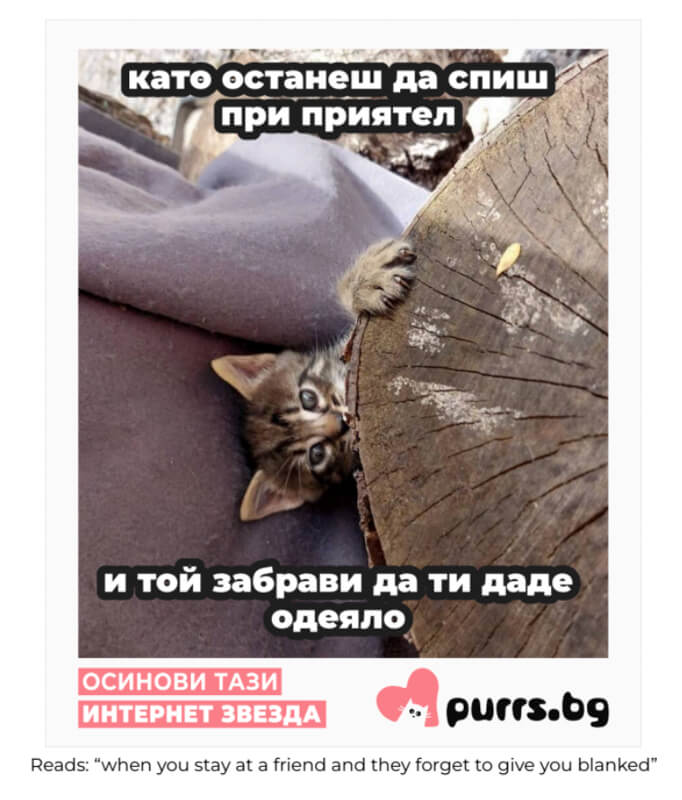
Our "Adopt a Meme" concept reframed adoption listings as memes and won several marketing awards.
In 2025, we rewrote the platform from Ruby to Elixir/Phoenix for the concurrency and fault tolerance international scale demands, and launched purrs.com. Growth shows up across user base, adoption activity, engagement.
Every number so far — the traffic, the users, the adoptions, the V1-to-V2 platform rewrite, the team that built it - was produced without commercial pressure or revenue optimization. There is no existing P&L to extrapolate from, by design.
After five years working alongside rescuers, NGOs, adopters, and municipal staff, the Purrs team has mapped the city cat lifecycle from street to permanent home.
The stages a cat moves through, from street to permanent home and beyond.
Purrs V1 and V2 brought structure and visibility to adoption, but the rest of the lifecycle, and the economics around it, stayed untouched.
This is why we are introducing Purrs OS — a complete ecosystem of interconnected solutions, each addressing a distinct stage of the lifecycle.
Structure helps, but the deeper limit is economic: rescue work is chronically underfunded, and supporters rarely see their contribution compound. Purrs OS uses on-chain rails (EURC settlement, transparent attribution, and the $PURRS utility token) to fix the parts of the model that fiat-only infrastructure can't.
PurrsGO
Ambient stray cat mapping for caretakers, rescuers, and municipalities
PurrsGO is a mobile app that turns any passerby into a potential observer for the cat rescue community. Anyone can snap a photo of a stray cat to log it on a live, geotagged map. An AI model analyses each photo for the universal "ear-tip" marker — the standardised indicator that a cat has been spayed or neutered as part of a TNR (Trap-Neuter-Return) program — and flags the cat accordingly.
The same data layer serves multiple workflows in the community:
- Caretakers track the colonies and individual cats they look after, and gain reassurance when others spot them
- Rescuers scout candidates for adoption and revisit cats they are evaluating for socialisation potential
- TNR coordinators quickly identify replacement candidates when a booked neutering slot is at risk of being wasted, and capture cats for TNR that turn out to be socialisable enough for adoption
- Municipal governments plan TNR campaigns based on real population data and measure programme effectiveness against budget spent
Cats identified through PurrsGO that show strong adoption potential can be promoted directly into the Purrs platform — listed for adoption by a verified rescuer, with a Cat Bond opened to fund their care.
Verified profiles
Identity and trust layer for shelters, rescuers, and NGOs
Purrs Verified Profiles is the platform's trust and identity layer for rescue organizations. Shelters, NGOs, and independent rescuers apply for verification through a structured onboarding process that confirms their legal status, rescue track record, and welfare standards. Verified profiles receive a public trust badge, priority listing placement, and access to advanced platform features.
Trust is the foundational problem in online adoption. Adopters need confidence that the person they are sending money to is legitimate. Bond participants need to know the rescue is real. Corporate sponsors need verified counterparties for CSR reporting. Verified Profiles provides that layer — and in the protocol context, it is the gating mechanism for Cat Bond issuance. Only verified rescuers can open bonds, ensuring that on-chain funding instruments are backed by real, vetted rescue operations.
Care Pool
On-chain funding for rescue costs — before adoption
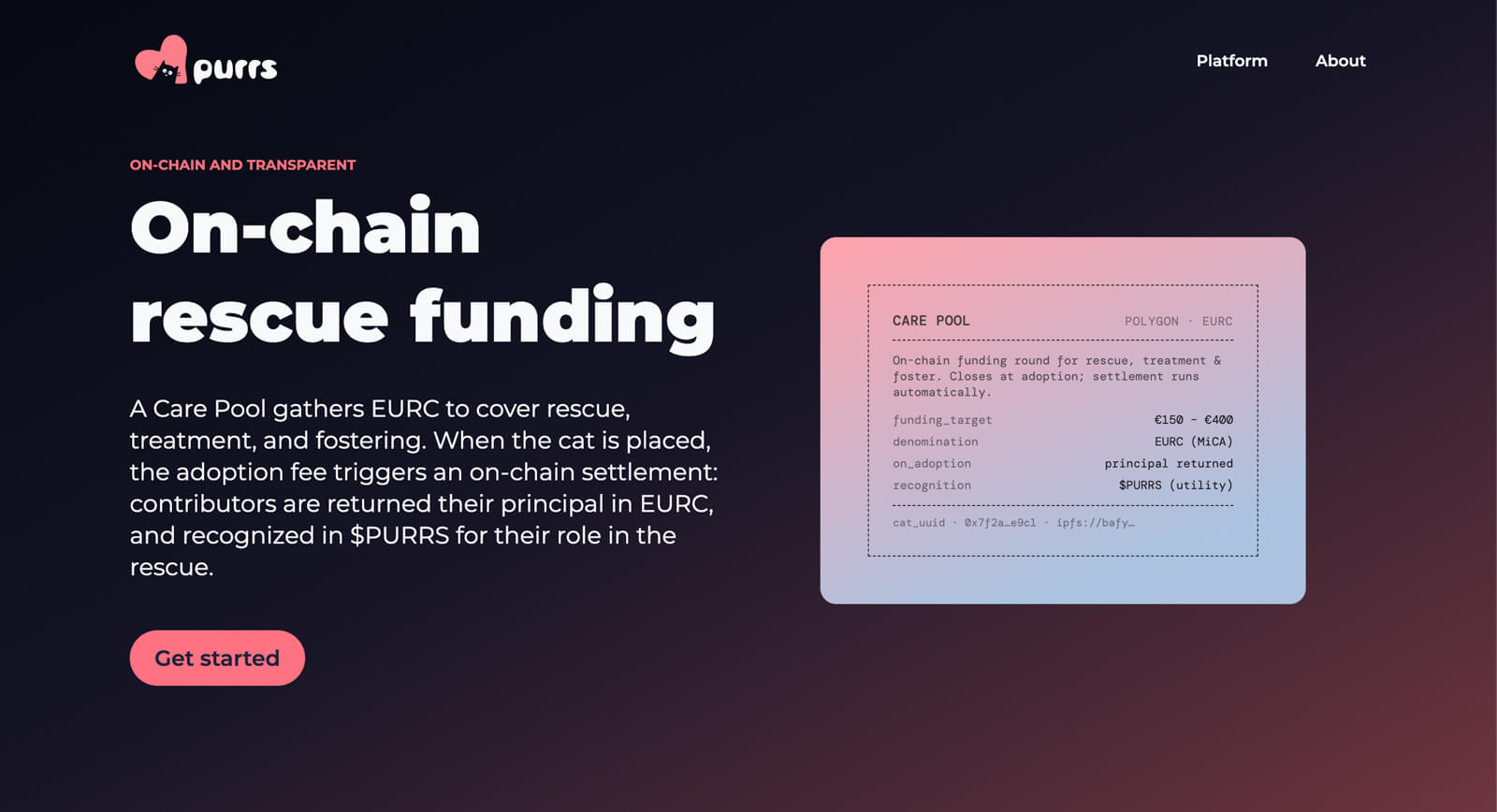
When a cat is rescued, the rescuer opens a Care Pool — an on-chain funding round in EURC for that specific cat. Community members contribute toward vet care, vaccinations, neutering, and foster costs. When the cat is adopted, the adoption fee returns each contributor's principal in full, pays the rescuer an operations fee, and allocates to the DAO treasury and protocol.
Contributors are also recognized with $PURRS, the protocol's utility and governance token. Rewards reflect breadth of participation across the protocol — the number of cats supported, ongoing governance activity, and engagement over time — rather than the size of any single contribution. $PURRS is not a yield.
Care Pools solve the upfront cost problem that prevents many rescues from happening. Contributors are not donating — their capital recycles. The same pool of supporters can fund dozens of cats over time.
Purrs.AI
AI-powered content generation for faster, better adoptions


Purrs.AI is a generative AI layer built into the platform that improves the quality of the listings.
Most rescuers are volunteers without marketing experience, and listing quality directly determines how fast a cat gets adopted. Purrs.AI lifts photo and copy quality to professional standards in seconds, so volunteer rescuers compete on visibility, not on marketing skill.
Home Abroad
International cat adoption listings
Cats are unevenly distributed geographically - warmer regions have many, colder regions far fewer. As a result, adopters in northern countries often face long waits, while shelters in southern countries struggle to place every cat in their care.
Home Abroad makes cross-border adoption practical: localized listings, AI translation, and a structured handoff between rescuer and adopter across languages.
Cat sponsoring
Corporate sponsorship that funds the wait — with on-chain ESG proof
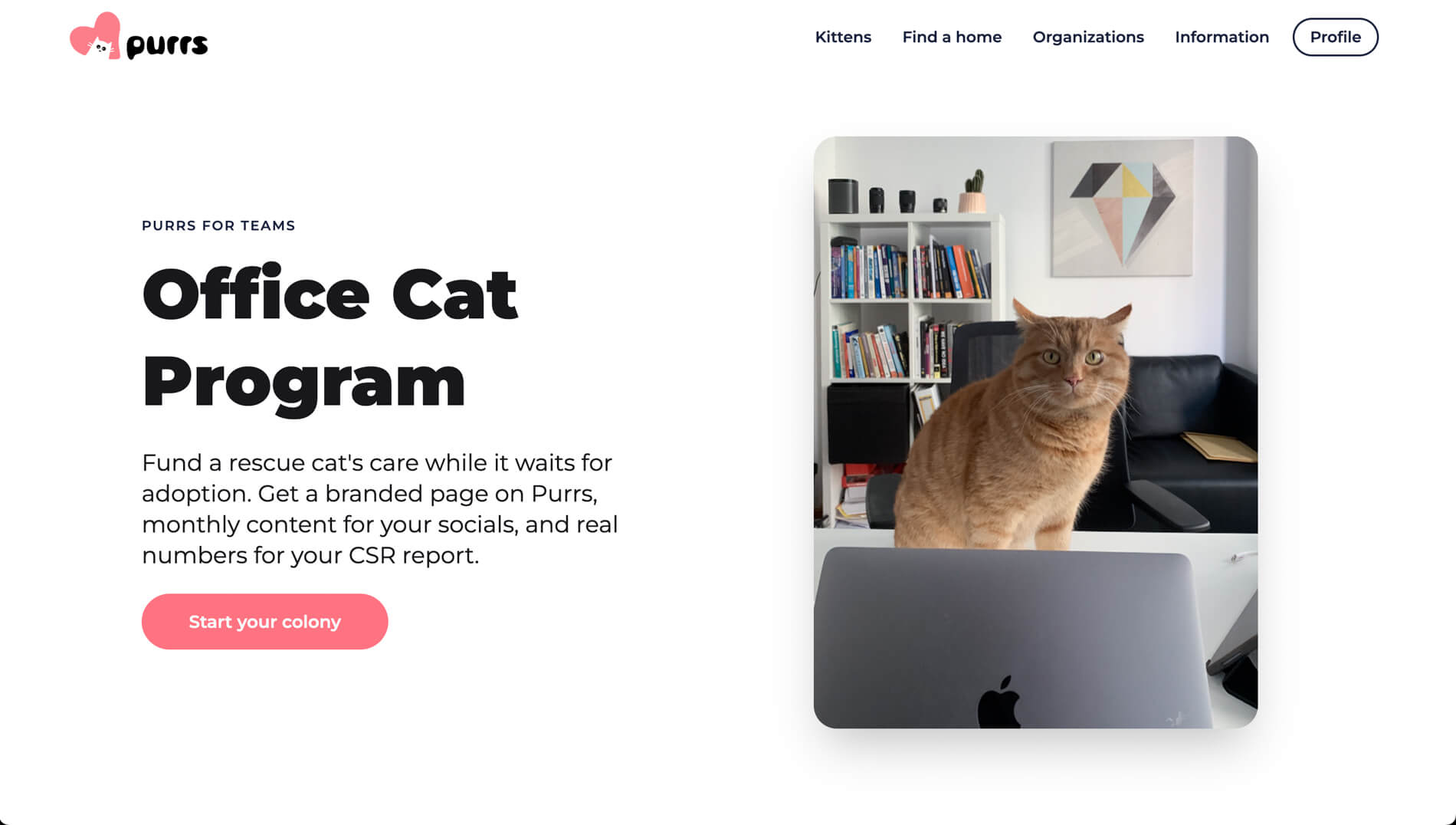
The gap between rescue and adoption is the most expensive and least funded stage. The Office Cat Program turns corporate CSR budgets into direct, weekly funding for cats in care. Companies choose rescue cats on Purrs, pay a weekly sponsorship fee, and receive monthly content kits and quarterly impact reports in return.
Each sponsoring company gets a branded partner page at purrs.com/partners/yourcompany that reflects live activity — cats sponsored, shelter days funded, EURC deployed, and adoption outcomes — so impact stays clear, auditable, and easy for third parties to verify.
Corporate Office Cat pricing is on a per-location basis: each site or geography the company sponsors is priced as its own footprint, so commitments line up with where the program runs. Sponsorship revenue is allocated 65% to the rescuer, 20% to promotion (reach, creative, and content kits), and 15% as a platform fee.
Purrs Style
Unforced placements — adoptable cats as the talent
Lookbook
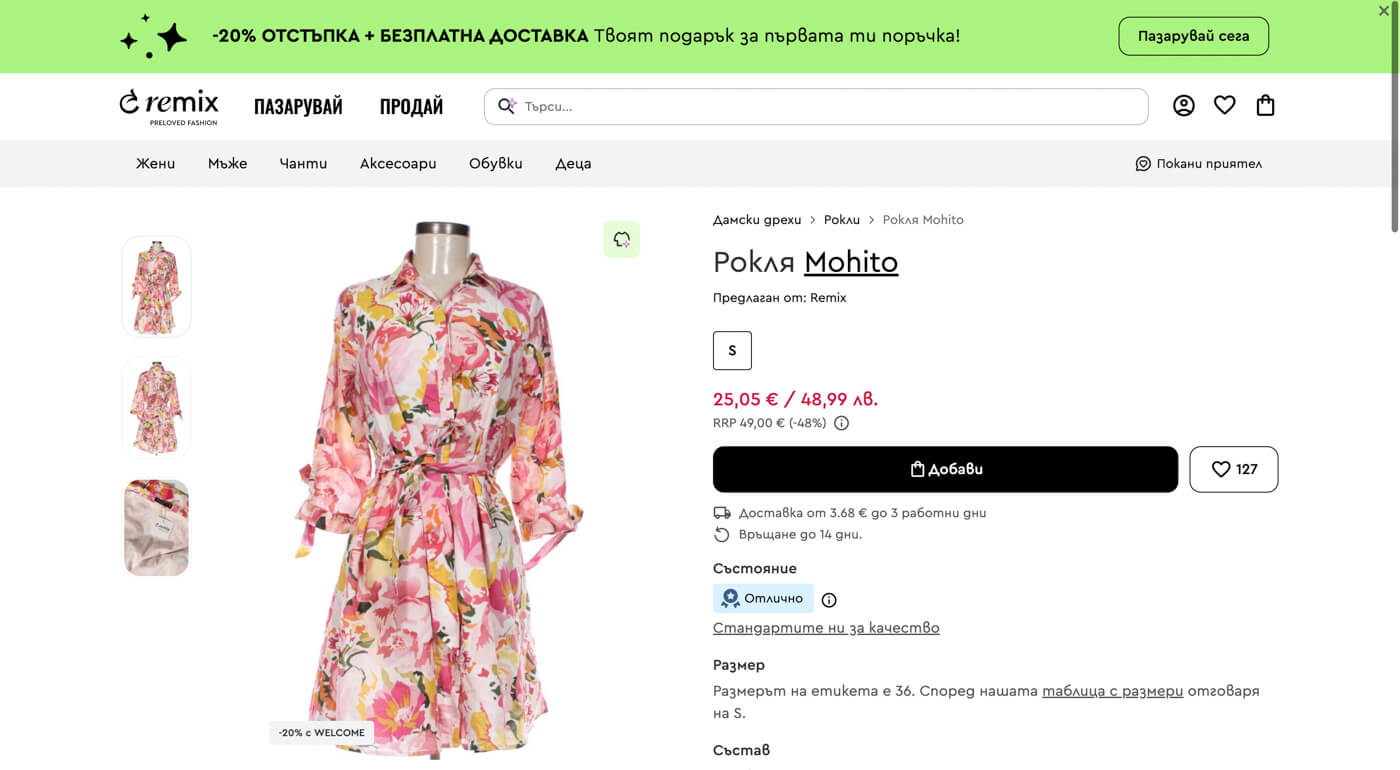
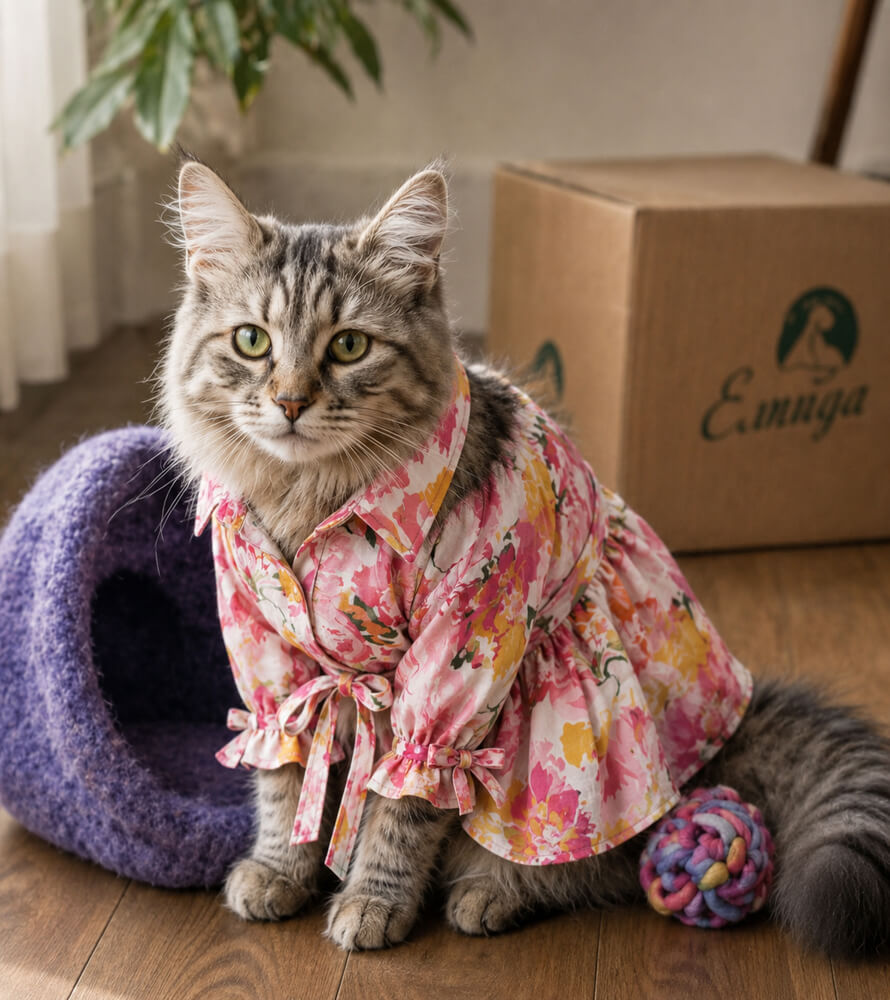
Purrs Style is the deliberately chill take on sponsorship: no manifesto, no siren emojis – just adoptable cats wearing one honest piece while they still read as themselves in the feed. The listings stay adoption-first; the accessory is scenery. Brands get a humane, low-key story layer next to real profiles, and the vibe stays closer to “shelter Tuesday” than a billboard takeover.
The service charges brands and splits the revenue 50/50 between the platform and the cat’s rescuer.
Marketplace
purrs.shop — curated commerce that generates rescuer royalties
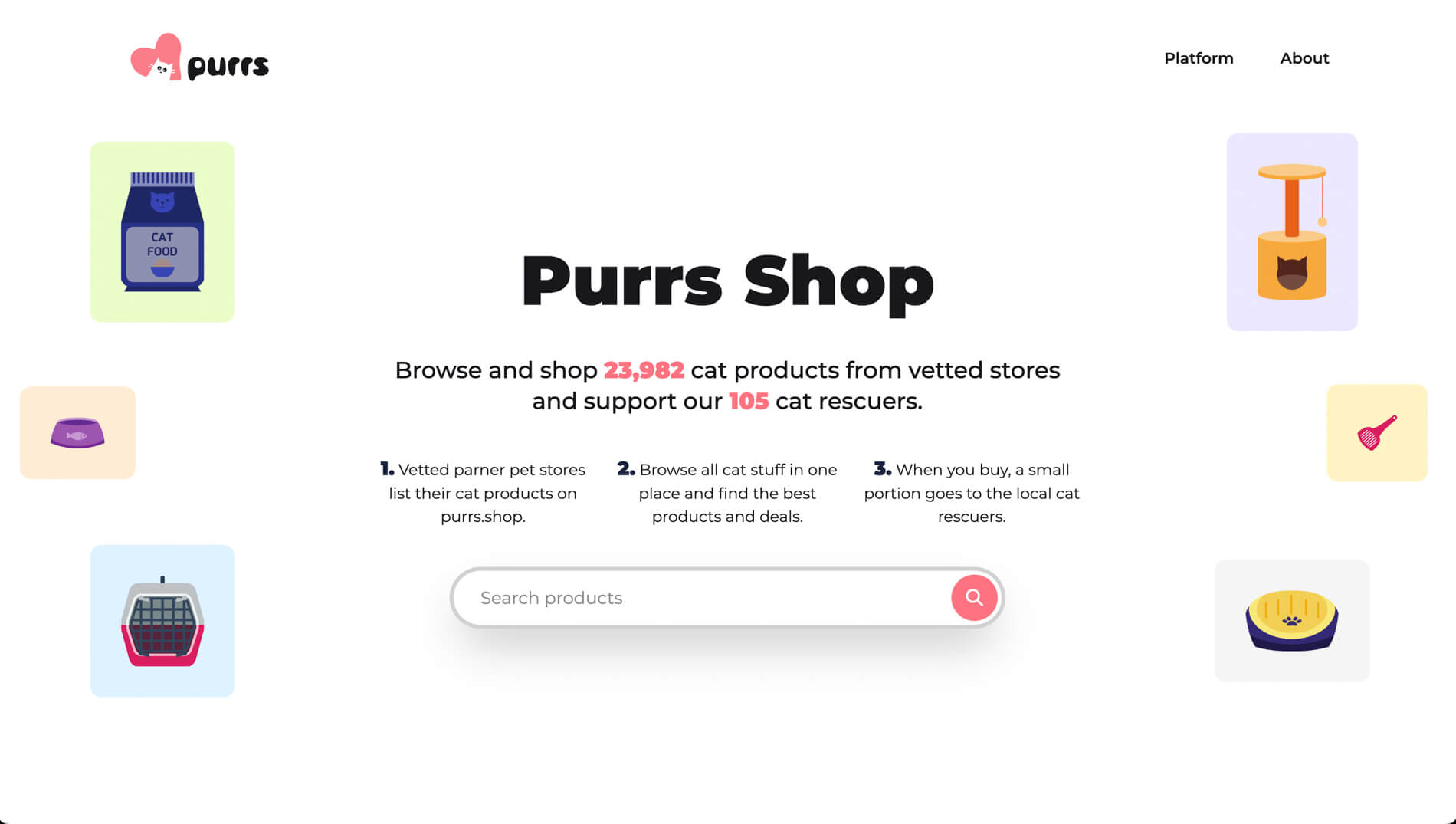
purrs.shop is a multi-vendor marketplace where partners plug in their own stores and product catalogs — the same model as eMAG or Skroutz. Shoppers discover and check out on purrs.shop; partners fulfill orders from their own inventory.
Every purchase by an adopter is attributed to their cat's UUID on-chain. Purrs collects a 1–3% commission on attributed sales, which the RoyaltyRouter smart contract distributes automatically. Adopters generate an ongoing rescuer royalty stream simply by buying what they would have bought anyway.
Animal welfare runs on trust. For five years, Purrs has been that trusted intermediary inside Bulgaria. To expand across borders and bring serious financial tools to the rescue community, we need infrastructure that scales beyond a single jurisdiction and a single team. That's the protocol.
$PURRS
The $PURRS utility token is the internal mechanism for accessing resources, coordinating incentives, and rewarding contributions within the Purrs ecosystem.
Its design is guided by seven principles:
01 Sustainable demand-supply balance
$PURRS tokenomics should support a durable balance between utility-driven demand and circulating supply. The goal is to create long-term ecosystem health by tying token demand to real usage while avoiding excessive emissions, reflexive sell pressure, or short-term speculative mechanics.
02 Cost-decoupled utility sinks
$PURRS consumption should prioritize features with low or near-zero marginal cost to the protocol. Token sinks should, where possible, remain decoupled from fiat-denominated operating expenses such as AI inference, third-party APIs, cloud infrastructure, or external service fees. This protects protocol margins as usage scales.
03 Mission alignment
Tokenomics must never reduce the number of cats adopted. Every fee, reward, gating mechanism, marketplace feature, or incentive loop should be evaluated against this constraint. Adoption outcomes are the hard ceiling on monetization.
04 Rescuer-first economics
Rescuers should not be the primary paying party. They already bear the operational and financial burden of cat care, transport, medical treatment, fostering, and adoption coordination. $PURRS should instead help route resources, visibility, and rewards toward rescuers without increasing their cost burden.
05 Accessibility for non-crypto users
$PURRS must be intuitive for users with no Web3 background. Consumer-facing experiences should avoid unnecessary crypto complexity. Advanced mechanics such as staking, liquidity provision, bridging, or governance delegation should either be avoided or fully abstracted away from mainstream users.
06 Demand precedes emission
New $PURRS should enter circulation only when matched by real protocol activity, such as funded cat bonds, completed adoptions, marketplace transactions, verified contributions, or other measurable ecosystem actions. Supply expansion should be usage-linked rather than purely time-based, reducing the risk of unlock cliffs and emissions that are disconnected from demand.
07 Utility-first, security-aware design
$PURRS is designed and documented as a utility token. The protocol deliberately avoids mechanisms that resemble securities, including profit-sharing, dividend distributions, equity-like claims, or promises of token appreciation. Token functionality should focus on access rights, ecosystem participation, contribution rewards, and governance where appropriate. The design should be reviewed against relevant frameworks, including EU MiCA, US securities considerations, and UAE virtual asset regulations as the protocol expands.
Earn, spend, lock
$PURRS is never sold to users. New tokens enter circulation only when a real on-chain action takes place (a cat funded, adopted, sponsored, or attributed at checkout), so emission tracks usage. When users pay in EURC for platform benefits, the protocol executes the corresponding token action — open-market buy, burn, or lock — on their behalf, converting every feature purchase into real buy pressure on the circulating float without exposing users to any crypto complexity. The spend side is cost-decoupled: every sink unlocks a capability the protocol can produce at near-zero marginal cost, with no fiat outflow. The most important sink is Verified status — Verified rescuers, NGOs, and shelters are the only entities permitted to open Care Pools, list cats, and receive royalty streams, and they must hold a tier-minimum $PURRS balance under a rolling 12-month lock to keep it.
The $PURRS economy mirrors the protocol's own growth. Every step in the loop is platform usage translated into token demand.
Rescuers, sponsors, and organizations buy and hold to operate, not to speculate, so demand expands as the user base and product surface expand. Token demand and product demand move on the same trajectory.
Spend feeds Grow: real activity expands the network, and a larger, more active community drives the next round of acquisition. New supply enters only when real usage warrants it.
Economically viable - $PURRS is an amplification, not life support
Strip $PURRS from the model and the protocol still operates: Verified subscriptions, sponsor EURC fees, Care Pool platform fees, and marketplace commissions all clear in fiat. The token accelerates onboarding, deepens retention, aligns long-term incentives, and converts attribution flows into community capital — but it is not load-bearing for survival. A fiat-viable business with a token layer that can scale value capture beyond what fiat alone would compound.
Supply, spend, rescues
Annual rescue intake — addressable by Verified profiles and Care Pool funding
Owned cats across EU-27, GCC, US, and Canada
Annual cat food, vet, and accessories spend — addressable by purrs.shop attribution
Cat people aren't pet people
Every adoption platform on the market — Petfinder, Adopt-a-Pet, Deine Tierwelt, La SPA, Rescue Me — treats animal lovers as one audience. Dogs, cats, rabbits, reptiles, parrots, all funnelled through the same directory, the same generic filters, the same banner ad slots wedged between profiles of cats waiting for surgery.
Five years of running Purrs has produced data that contradicts the premise. Cat people are a distinct audience. Our highest-engagement users do not want a dog, a hamster, or a parrot — they identify as cat people the way other people identify as runners or readers. It is not a sub-segment of pet ownership. It is a category in its own right. Nobody is building for it.
The incumbent platforms haven't moved since 2010. Directory layouts. SEO landing pages. Display ads. No design language. Adoption-as-database. Purrs is a product, not a directory — modern, cat-native, with the right design energy.
The four buckets
- 2010-era directory UX
- Ad-funded business model
- No vertical specialization
- No on-chain layer
- No rescuer economics beyond a one-time fee
- Token routes donations to shelters
- No adopter base
- No verified rescuer pipeline
- No lifecycle products
- Gamified sponsorship of shelter cats
- Adoption flow is indirect
- Early-stage, no operating history
- Not cat-only (DogLibre is dog-side)
- Cats only, by design
- Modern product, no ads
- EURC-settled Care Pools
- Verified rescuer base
- Lifetime rescuer royalty layer
- Five years of real adoptions
$PURRS Token Supply & Allocation
1. Supply at a glance
| Allocation category | % | Tokens | Implied value at seed price | Release |
|---|---|---|---|---|
| Seed round | 6% | 60,000,000 | €3.96M | 12-month cliff, 24-month vest |
| Team & founders | 15% | 150,000,000 | €9.9M | 12-month cliff, 36-month linear vest (vs seed) |
| Community & rewards | 39% | 390,000,000 | — | Earned via protocol activity |
| DAO treasury | 17% | 170,000,000 | — | Governed by token holders |
| Ecosystem & partnerships | 12% | 120,000,000 | — | Released per partner agreements |
| Public launch & liquidity | 11% | 110,000,000 | — | At token launch |
| Total | 100% | 1,000,000,000 | — | — |
02 Seed round — 6%
| Parameter | Detail |
|---|---|
| Tokens offered | 60,000,000 $PURRS (6% of total supply) |
| Price per token | €0.066 |
| Total raise | €3.96M |
| Fully diluted valuation | €66M |
| Minimum ticket | €50k |
| Cliff | 12 months from token launch date |
| Vesting | Linear over 24 months following the cliff |
| Total lock-up period | 3 years from token launch before fully vested |
| Payment currency | EURC or EUR bank transfer |
03 Team & founders — 15%
150,000,000 tokens are reserved for the founding team. This allocation reflects significant work already completed — a live platform with real users in Bulgaria, a detailed protocol whitepaper, the Cat Bond design, the royalty layer architecture, and the purrs.shop concept — as well as the ongoing commitment required to build and scale the protocol.
| Parameter | Detail |
|---|---|
| Tokens | 150,000,000 $PURRS (15% of total supply) |
| Cliff | 12 months from token launch date |
| Vesting | Linear over 36 months following the cliff — extended versus seed purchasers' 24-month schedule |
| Total lock-up period | 4 years from launch before fully vested |
Founders and core team opted for a 36-month vest after the cliff, lengthening unlock versus seed to signal alignment: builders unlock alongside ecosystem milestones rather than ahead of them.
04 Community & rewards pool — 39%
The largest allocation — 390,000,000 tokens — is reserved for the people who create value within the Purrs ecosystem. This pool is never sold. It is earned through protocol activity and distributed automatically by the smart contracts.
— Rescuers earn $PURRS when a cat they rescued is successfully adopted through the platform
— Rescuers earn ongoing $PURRS from attributed purchases via purrs.shop — a royalty stream for the cat's lifetime
— Adopters earn $PURRS for linking purchases through purrs.shop
— Weekly cat sponsors earn $PURRS proportional to their streak length — rewarding consistent, reliable support
— Long-term contributors and DAO participants earn $PURRS through governance activity and community grants
This pool does not have a fixed release schedule — tokens are minted from it as qualifying activity occurs, up to the 390,000,000 ceiling. The rate of distribution is governed by the DAO once governance is live. In the early phase, it is set by the founding team and publicly documented.
05 DAO treasury — 17%
170,000,000 tokens are held in the Purrs DAO treasury. This pool funds the long-term health of the protocol — grants to animal welfare organizations, platform development bounties, emergency reserves, and any future initiatives voted on by token holders.
— Initially controlled by a multi-signature wallet held by the founding team
— Governance transfers to $PURRS token holders progressively as the community grows
— Any treasury expenditure above a defined threshold requires a DAO vote
— A portion is earmarked for cat welfare grants — distributing real funds to NGOs and rescuers outside the protocol's commercial activities
06 Ecosystem & partnerships — 12%
120,000,000 tokens are set aside for strategic partnerships — vetted partner stores on purrs.shop, vet clinic networks, pet insurance providers, and any organizations whose participation materially grows the protocol's reach and utility.
— Partner allocations are agreed individually and released on custom schedules tied to onboarding milestones
— No partner receives tokens without a signed integration agreement and live product presence on the platform
— This pool may also fund grants to animal welfare NGOs who onboard their rescue operations to Purrs
07 Public launch & liquidity — 11%
110,000,000 tokens are allocated to the public token launch and initial liquidity provision, covering two distinct uses: seeding the initial trading liquidity pool on Polygon, and a public launch event for community members who want to participate before the protocol reaches full scale.
— Liquidity seeding: approximately 69,000,000 tokens paired with €50k EURC in a QuickSwap v3 or Uniswap v3 pool. Establishes the initial market price and enables trading.
— Public launch allocation: approximately 41,000,000 tokens offered at a price above the seed round, to be determined closer to launch based on protocol progress and market conditions.
— No lock-up on the liquidity pool allocation — liquidity must be available immediately for a functional market.
08 Regulatory note — MiCA compliance
$PURRS is designed and will be operated as a utility token under the Markets in Crypto-Assets Regulation (MiCA). It is not marketed or structured as a financial instrument, security, or investment product. All financial yield within the Purrs Protocol is denominated in EURC, not $PURRS. $PURRS carries no promise of financial return.
— The seed round is structured as a private placement to a limited number of qualified participants, not a public offering
— Purrs will obtain legal counsel from an EU-qualified crypto lawyer before any public token distribution
— Token documentation, including this document, will be reviewed for MiCA compliance prior to public release
— The utility-first design — tokens are earned through platform activity and spent on platform features — is the core of the MiCA utility token classification argument
09 Future minting — capped inflation
The 1,000,000,000 initial supply is not a permanent ceiling. As the Purrs Protocol matures — more rescuers onboarding, more cats adopted, more partners on purrs.shop — the community rewards pool may need replenishing to sustain the incentive layer. A fixed supply that runs dry defeats the purpose of a protocol built on long-term behavioral rewards.
| Parameter | Detail |
|---|---|
| Hard cap (maximum ever) | 2,000,000,000 $PURRS (2 billion tokens) |
| Additional minting authority | DAO governance vote only — no unilateral minting |
| Minimum time-lock | 30 days between proposal and execution |
| Minimum approval threshold | Supermajority (>66% of voting tokens) |
| Purpose restriction | New tokens may only be allocated to the community rewards pool or DAO treasury — not to the team, seed purchasers, or any individual wallet |
| Frequency limit | No more than one minting event per 12-month period |
| Maximum per event | No single minting event may exceed 5% of the then-current total supply |
Even in the most aggressive minting scenario — one event per year at the 5% maximum — it would take over 13 years to reach the 2 billion hard cap from the initial 1 billion supply. In practice, minting events will be rare and only triggered when the community rewards pool falls below a threshold that would impair the protocol's incentive mechanics.
The minting mechanism is designed to protect existing allocations, not redirect supply. New tokens can only enter the community rewards pool — they cannot be directed to founders, team, or early purchasers. Seed purchasers hold 6% of the initial supply. In the theoretical scenario where the full 2B hard cap is eventually reached, their tokens would represent 3% of total supply. This is a known, bounded, transparent change in proportional allocation — not an open-ended inflation risk.
Every minting event requires a 30-day public governance process. Seed purchasers who hold $PURRS tokens have voting rights and can participate in or oppose any proposed mint.
Terms & use
This round funds the protocol and commercial layer that converts five years of accumulated platform value into a sustainable on-chain economy.
The seed round sells 60,000,000 $PURRS at a fixed price of €0.066 per token, raising €3.96M. This is a private placement to a small number of aligned purchasers and will not be offered to the general public.
| Parameter | Detail |
|---|---|
| Tokens offered | 60,000,000 $PURRS (6% of total supply) |
| Price per token | €0.066 |
| Total raise | €3.96M |
| Fully diluted valuation | €66M |
| Minimum ticket | €50k |
| Cliff | 12 months from token launch date |
| Vesting | Linear over 24 months following the cliff |
| Total lock-up period | 3 years from token launch before fully vested |
| Payment currency | EURC or EUR bank transfer |
Token pricing rationale
The genesis unit price of €0.066 implies a fully diluted token-economic reference of €66M against the 1 billion initial supply. That price reflects operational maturity at TGE — not a discount on an unbuilt product.
The senior team has run the zero-to-scale journey before, together, more than once — relevant to delivering the protocol at TGE.
- Built and scaled systems through HEXO's 0 → €1B market cap run (one of Canana's largest cannabis producers)
- Took Whippy from 0 → $10M ARR (US-based SaaS)
- Half a dozen other 0-to-1 and 0-to-N journeys across the senior team
- Years of working together as a single unit — not a team assembled at the term sheet
A proven operator bench supports the unit price chosen for the genesis allocation.
Five years of live operations in a real market. Real users, adoptions, rescuer relationships, and data — utility the token will serve from day one.
- Live since 2021 — the largest cat adoption platform in the country
- V1 → V2 platform rewrite on Elixir/Phoenix — production-grade and multi-market ready
- Award-winning marketing identity ("Adopt a Meme", IAB MIXX)
- Verified rescuer network, workflows, content stack — all operational, not a roadmap item
Documented usage and workflows at TGE anchor the initial unit price in observable platform activity.
Purrs is the first integrated stack covering every stage of the cat lifecycle offering unmatched efficiency.
- Full-cycle coverage from street to permanent home — one connected stack
- On-chain settlement and attribution bind the modules into one economic system, compounding with every addition
- Every incumbent is single-purpose — Petfinder is a directory, Pawthereum a donation token, Token Tails a sponsorship game
Purrs owns its category, it does not compete in it.
Comparable EU utility-token launches typically set genesis allocation prices against documented platform usage, regulatory readiness, and the scope of on-chain utility at TGE — the same factors reflected in the €0.066 unit price here.
What the €3.96M funds
| Spend | Estimated range |
|---|---|
| Protocol & engineering build | |
| Smart contract development and primary audit (Cat Bond, royalty router, welfare bond, DAO treasury) | €180k–€230k |
| Core protocol deployment and integration on Polygon | €100k–€130k |
| Post-launch security retainer and re-audit budget for upgrades | €60k–€90k |
| purrs.shop marketplace build and multi-vendor partner onboarding infrastructure | €130k–€160k |
| Token launch & liquidity | |
| Initial DEX liquidity seeding (QuickSwap / Uniswap v3) | €100k–€140k |
| Market-making engagement, 24-month contract | €240k–€360k |
| Token launch operations (KYC/AML tooling, sale platform integration, distribution mechanics) | €60k–€80k |
| Legal & compliance | |
| MiCA whitepaper, notification, and ongoing counsel | €80k–€120k |
| Cross-border structuring (EU operating entity, UAE/GCC expansion vehicles) | €50k–€90k |
| AML/KYC operations and partner contracts | €50k–€70k |
| Team & runway, 24 months | |
| Core engineering team (4–5 dedicated builders beyond founders) | €900k–€1.12M |
| Founder and leadership runway | €440k–€560k |
| Operations, finance, and admin | €260k–€280k |
| Go-to-market | |
| Brand launch and community growth | €100k–€140k |
| Corporate sponsor BD for Office Cat Program (sales motion + tooling) | €100k–€140k |
| Adopter acquisition campaigns (EU expansion + UAE launch) | €180k–€240k |
| Localization across launch markets | €40k–€50k |
| Reserve | |
| Contingency and operational buffer | €200k–€280k |
Mechanics
Everything works the same way a normal private placement does — you sign a purchase agreement, you wire euros, and you receive an asset on a schedule. The asset happens to be a token rather than a share certificate; the rest of the experience is familiar.
Purrs operates as a two-entity structure designed to preserve the nonprofit mission while enabling commercial activity at the scale this protocol requires.
The Purrs Foundation is the nonprofit that has operated purrs.bg since 2021. It owns the brand, the platform codebase, and the mission. It is the sole shareholder of the EOOD and cannot be acquired, diluted, or repurposed away from animal welfare.
Purrs Protocol EOOD (referred to throughout this section as "the OpCo") is a Bulgarian limited liability company (Дружество с ограничена отговорност) established to issue $PURRS, sign purchaser and partner contracts, and operate the platform under a service agreement with the Foundation. The MiCA-compliant whitepaper for $PURRS is notified to the Bulgarian Financial Supervision Commission (FSC, Комисия за финансов надзор), which is the designated MiCA competent authority for Bulgaria. Once the notification clears, $PURRS is offerable across the entire EU under MiCA's passport — Bulgaria, Greece, Spain, DACH, and every other member state, from a single filing. The OpCo is wholly owned by the Foundation; surplus flows back through IP licensing, service fees, and grants — not through dividends to insiders. The structure mirrors well-precedented setups used by Mozilla, Wikimedia, and Signal: nonprofit owns the mission, commercial subsidiary handles operations at arm's length.
Purchasers sign with the EOOD. The Foundation is not a counterparty to the round and bears no contractual obligations to purchasers. This is deliberate — it keeps the nonprofit clean and insulates the mission from the commercial layer.
Why Bulgaria
10% flat corporate tax — the lowest in the European Union. Estonia is 22%, Lithuania 15%, Germany 30%. Every euro of surplus the OpCo retains is taxed at the lowest available EU rate before flowing back to the Foundation.
The Bulgarian FSC is the designated MiCA competent authority. A single whitepaper notification gives $PURRS the full EU passport — identical legal effect to filing through Bank of Lithuania, BaFin, or any other member-state regulator.
From signature to liquidity
Step 01 — Sign +
The purchaser signs a Token Purchase Agreement (TPA) with the OpCo. The TPA specifies the token amount, price, cliff, vesting schedule, use of proceeds covenant, and reporting obligations. Standard KYC and AML checks run alongside. The minimum ticket is €50k.
Step 02 — Pay +
The purchaser transfers funds to the OpCo treasury. Two rails are supported: EURC (a euro-denominated stablecoin issued by Circle, regulated under MiCA — payment clears on-chain in minutes) or a standard EUR bank wire. Purchasers with no crypto experience use the wire; nothing about participating in the round requires the purchaser to hold or handle crypto until tokens are delivered.
Step 03 — Wait for TGE +
Between signing and the Token Generation Event (TGE), the EOOD holds purchaser funds in segregated treasury and deploys them against the published use-of-funds plan. In parallel, the EOOD notifies the Bulgarian FSC of the MiCA-compliant $PURRS whitepaper; the 20-working-day notification window clears the token for offering across the entire EU under the MiCA passport. TGE is the moment the $PURRS token contract is deployed on Polygon and tokens are first minted — per the roadmap, this lands in months 15–18 of this round. The TPA defines a long-stop date by which TGE must occur, with refund mechanics if it does not.
Step 04 — Receive tokens (locked) +
At TGE, the purchaser's full allocation is minted directly into a vesting smart contract that holds the tokens on their behalf. The purchaser designates a wallet address; we provide setup support if needed. From this point the schedule is enforced by code, not by trust — the contract cannot release tokens early, and the OpCo cannot claw them back.
Step 05 — Cliff, then linear vest +
For 12 months after TGE, no tokens unlock. After the cliff, tokens unlock linearly over 24 months — roughly 1/24th of the allocation becomes transferable each month, with the final tranche unlocking 36 months after TGE. The contract handles all of this automatically; the purchaser simply calls a claim function (or has us do it on their behalf) when they want to move unlocked tokens to their own wallet.
Step 06 — Hold, use, or transfer +
Once tokens vest, the purchaser may hold and use them on the protocol: vote in the DAO, spend on Verified status, Purrs.AI credits, and listing placement, or hold for governance participation. Transfers are also possible: on a public DEX (QuickSwap or Uniswap v3 on Polygon, where the OpCo seeds initial liquidity at launch) for ordinary sizes, or OTC to a single counterparty for larger blocks — a standard market practice, not a promoted feature of the round.
Purchaser safeguards
FAQ
How does the Token Purchase Agreement work in practice? +
The TPA is a contractual commitment by Purrs Protocol EOOD to deliver utility tokens at the Token Generation Event (TGE) per a defined vesting schedule. You agree a fixed token amount and price in EUR or EURC, complete KYC/AML, and transfer funds to the OpCo treasury. At TGE, your allocation is minted into an on-chain vesting contract; tokens unlock per the cliff and linear schedule. The TPA includes a long-stop date — if TGE does not occur by that date, refund mechanics apply as specified in the agreement.
Am I buying equity in the EOOD or the Foundation? +
Neither. You are buying $PURRS, a utility token issued by the Bulgarian EOOD. The EOOD's equity is held 100% by the Foundation and is not for sale. This is the design — the Foundation's ownership of the EOOD cannot be diluted, which is what keeps the structure permanently mission-locked.
What is the economic role of the token? +
$PURRS is a utility token used to access platform features — Verified status, listing placement, Purrs.AI credits, and DAO voting. It is earned through protocol activity and spent on platform features. Holding $PURRS confers no claim on revenue, profit, or assets of Purrs Protocol EOOD or the Foundation. There is no representation or assurance regarding the token's future market price.
Where do my tokens live during the cliff? +
In an audited vesting smart contract on Polygon. You can see your balance on-chain at any time. You cannot transfer or sell them, and neither can anyone else — the contract enforces the schedule. Once an unlock tranche releases, you call a claim function to move those tokens to a wallet you control.
I have never used a crypto wallet. Can I still participate? +
Yes. You can pay by EUR bank wire to the EOOD's Bulgarian bank account, and we help you set up a wallet between signing and TGE. The only step that requires a wallet is receiving tokens — by then you will have over a year of lead time and our team walks you through it. For institutional purchasers, we work with regulated custodians (Anchorage, Fireblocks, BitGo) who handle the wallet layer entirely.
How and when can I sell? +
After the 12-month cliff, you can sell each tranche as it vests. Two channels exist: on-chain via a DEX where the OpCo seeds initial liquidity and a market-maker keeps the spread tight (best for ordinary sizes), or OTC through a crypto desk that matches you with a single counterparty (best for large blocks that would otherwise move the market price). Selling on-chain is faster; OTC is cleaner for size.
What happens if Purrs doesn't reach TGE? +
The TPA sets a long-stop date. If TGE has not occurred by that date, unspent purchaser funds are returned pro-rata. The exact mechanic is in the TPA — read it carefully, ask your counsel to look at it, and push back on any clause that isn't clear.
How are taxes handled? +
Tax treatment of tokens varies materially by jurisdiction — many treat receipt at TGE as a taxable event at fair market value, some treat it as deferred until disposal. We do not give tax advice, and strongly recommend engaging a crypto-aware tax advisor in your jurisdiction before signing. The TPA and TGE structure are designed to be compatible with common treatments but the responsibility for your own tax compliance sits with the purchaser.
Why Bulgaria as the OpCo jurisdiction? +
Three reasons. First, MiCA passporting is identical from any EU member state — Bulgaria's FSC clears a notification on the same legal terms as Bank of Lithuania or BaFin, and a passport from one is a passport everywhere. Second, the team, the Foundation, and five years of operating substance are already in Bulgaria; incorporating elsewhere would mean engineering artificial substance abroad while keeping the real operations at home. Third, Bulgaria has the lowest corporate tax rate in the EU (10%), which means more of each surplus euro flows back to the Foundation and the mission rather than to a foreign tax authority. The combination — same passport, real substance, lower tax — is hard to beat with any "premium" jurisdiction.
Can the EOOD or Foundation just take the money and run? +
Three things stop this. First, the TPA contractually binds the EOOD to the published use of funds with refund obligations on failure to deliver, enforceable under Bulgarian law and recognized across the EU. Second, treasury transparency — significant outflows above a defined threshold require a public on-chain DAO vote with a 30-day time-lock. Third, the Foundation's reputation is the platform's most valuable asset; five years of operating publicly under the same brand is the strongest possible signal that this is not a build-and-disappear team.
How is the Foundation protected from the commercial side blowing up? +
The EOOD is a Bulgarian limited liability entity. The Foundation owns it as a shareholder, not as a guarantor. Purchaser claims and commercial obligations live at the EOOD level and do not pass through to the Foundation. The platform IP is licensed to the EOOD, not transferred — if the EOOD ever ceased to exist, the IP returns to the Foundation by default.
Founders & core team
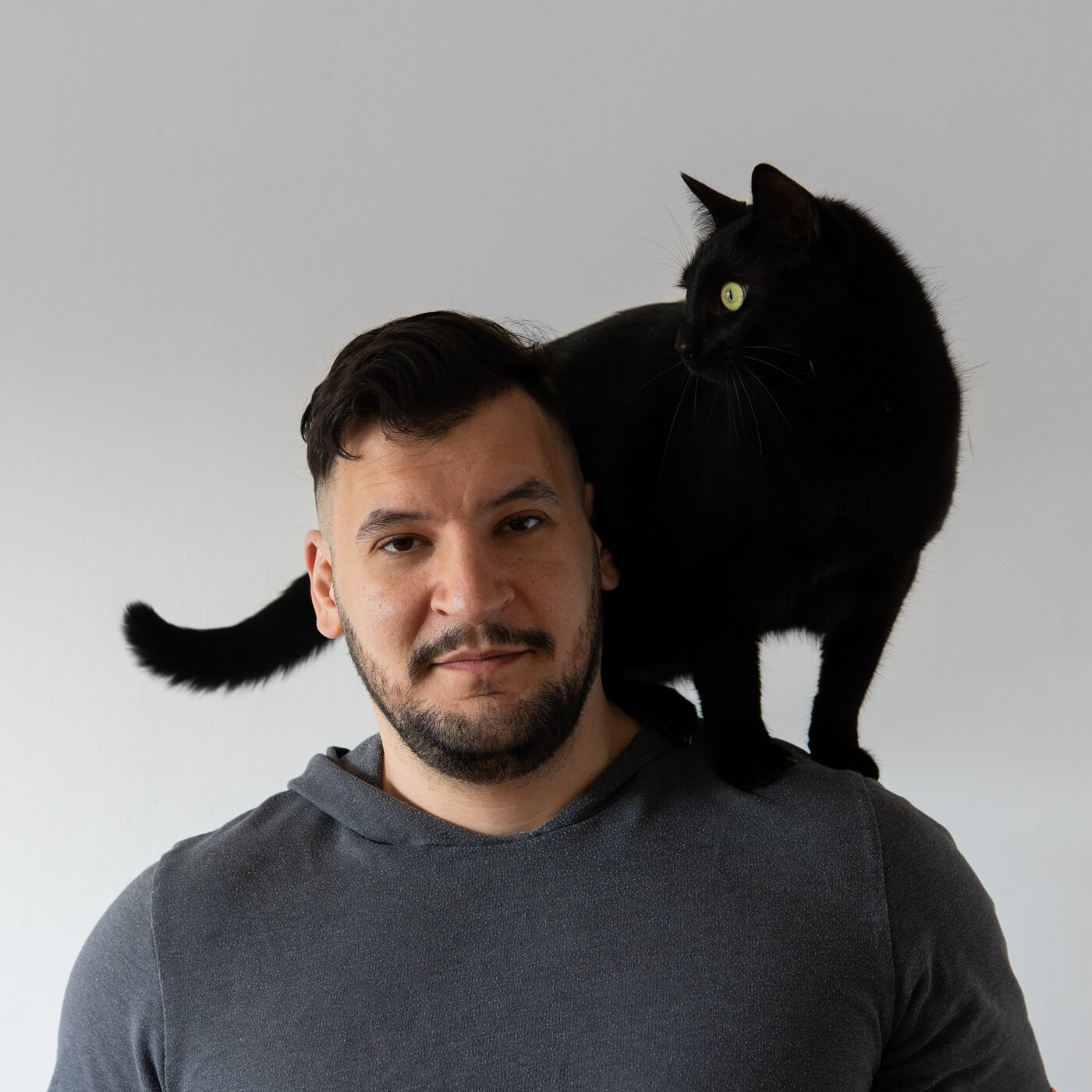
Biser is a pragmatic generalist who spent the last decade solving complex problems with tech.
He has led multiple technical initiatives from the ground up for companies like the billion-dollar HEXO, one of Bulgaria’s largest tech retailers, and several pioneering startups.
He owns Purrs' product design and operational systems that will scale the platform to the next level.

Lawyer and three-term Member of the Bulgarian Parliament, having served in the 49th, 50th, and 51st National Assemblies.
Petar provides Purrs with a rare combination of legal expertise and lawmaker-level perspective — directly relevant for a platform operating at the intersection of data regulation, animal welfare law, and municipal partnerships.
He oversees Purrs' legal function, leads regulatory strategy, and advises on government relations and institutional engagement.

Presian leads brand strategy, positioning, and go-to-market. He has worked with Purrs since its early days; campaigns such as "Adopt a Meme" (IAB MIXX Awards) helped grow purrs.bg into the country's largest cat adoption platform.
He previously spent six years co-running one of Bulgaria's most awarded independent creative agencies, building its strategy practice for clients including Molson Coors, Bosch Digital, and Mall Galleria. Work featured internationally in Campaigns of the World.
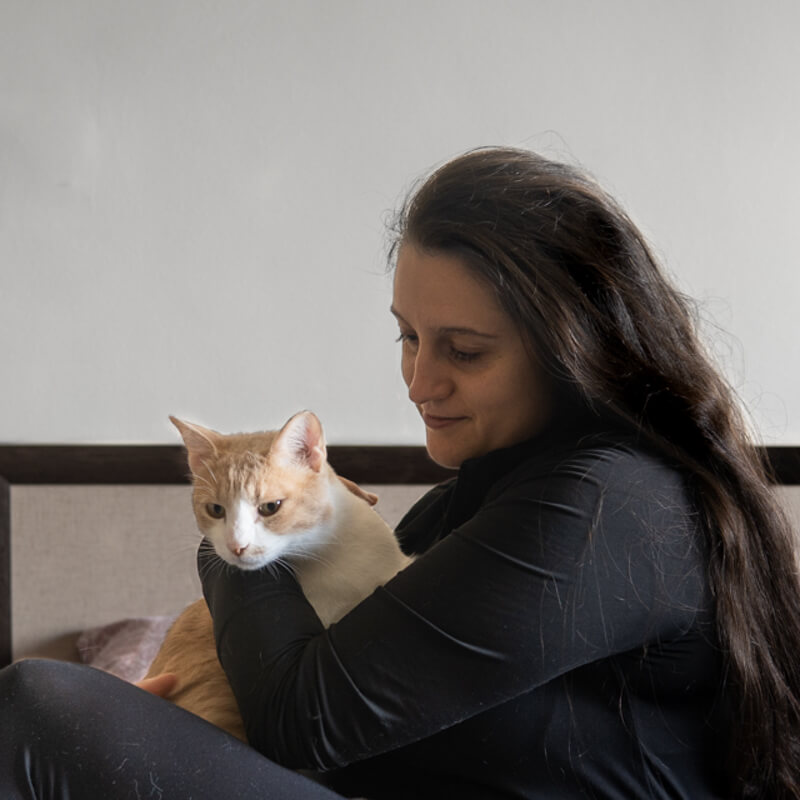
Annie is a technical operations leader with experience across multiple projects, instrumental in scaling a SF startup from zero to $4M+ ARR in under three years.
She specializes in the operational systems, delivery infrastructure, and business logic required to drive rapid growth, bringing a proven track record of turning early-stage engineering organizations into high-yield commercial operations.

Neli leads communications and content at Purrs. She holds a degree in Public Relations and Media from Sofia University and 20+ years in enterprise roles as a supervisor, process owner, and automation lead.
She sets voice and messaging for rescuers, adopters, sponsors, and municipalities; owns localization for new markets; and runs community communications, complaint handling, content strategy, and sponsor partner messaging.
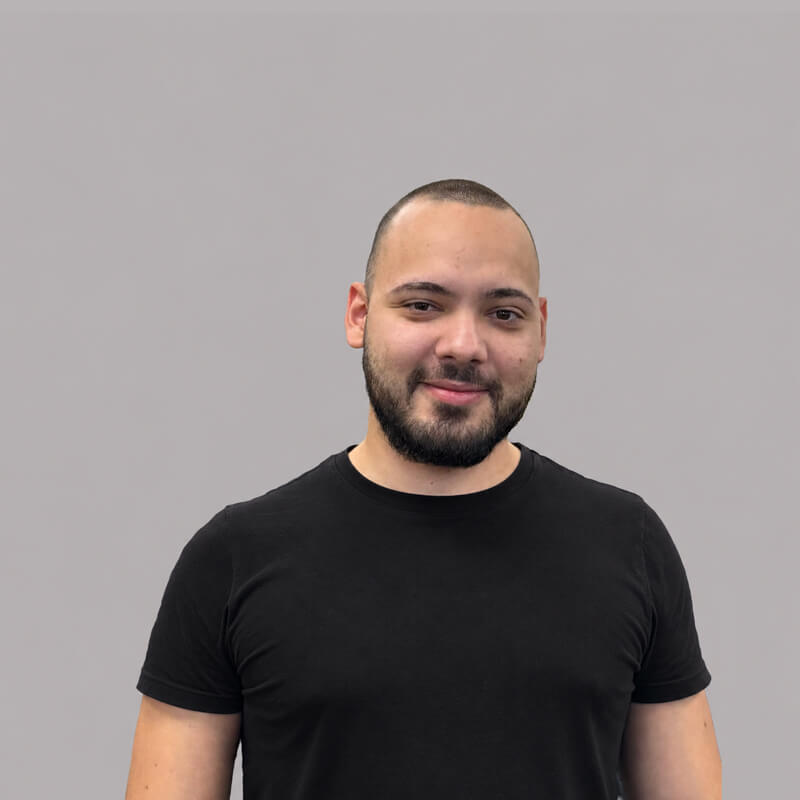
Stili is a full-stack developer at Purrs and a strong example of next-generation, AI-native engineering — using modern AI tooling end-to-end to ship at a velocity older workflows can't match, without trading off on code quality.
He was a core contributor to the Purrs v1-to-v2 migration onto Elixir/Phoenix, moving the platform onto the concurrent, fault-tolerant foundation that supports its next phase: multi-market expansion, on-chain integration, and growing rescuer and adopter volume.

Yoana is Purrs' User Experience Developer — a former practicing veterinary doctor who transitioned into software engineering.
At Purrs, she shapes the adopter and rescuer experience across the platform — listing flows, profile detail, and the lifecycle pathways.
Her veterinary background means UX decisions are grounded in domain accuracy and not generic interface logic.

Taner leads payments engineering. Prior, he was part of the payments squad at Swissquote Bank in Geneva. He built the core services that handle money flowing in and out of the bank.
He then joined Migros Online in Zurich, where he developed search microservices for one of Switzerland's largest e-commerce platforms. Earlier in his career he worked on pricing engines, feed handlers, and billing systems for clients including Stars Group, SimpleBet, and Motorola.

Nicky guides architecture and the team that ships it. He has a decade of experience with Elixir and Phoenix that Purrs heavily utilizes.
He has spent his time building data-heavy systems and operating complex databases under production load while assisting engineering teams, balancing delivery pace against the long-term shape of the codebase.
This document does not constitute financial, legal, or tax advice. $PURRS is a utility token and is not offered or marketed as a security, financial instrument, or unit in a collective investment scheme under EU law, including MiCA. No representation is made regarding the future market price or liquidity of $PURRS. Past performance of the Purrs platform is not indicative of future protocol or token outcomes. The projections and figures included are illustrative estimates only and should not be relied upon as forecasts.